Grigory Kuzin: The media market needs a unified digital industrial framework
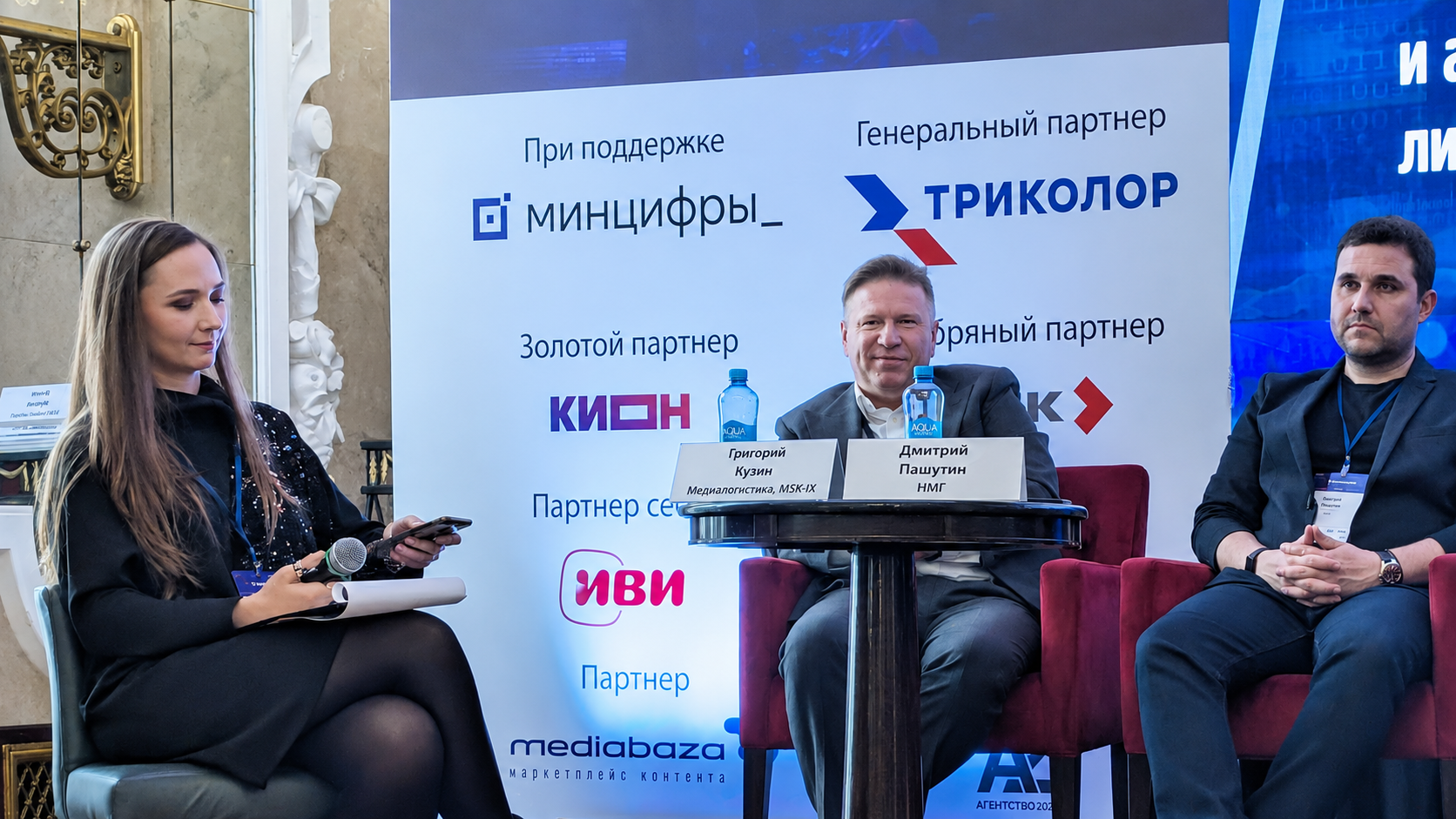
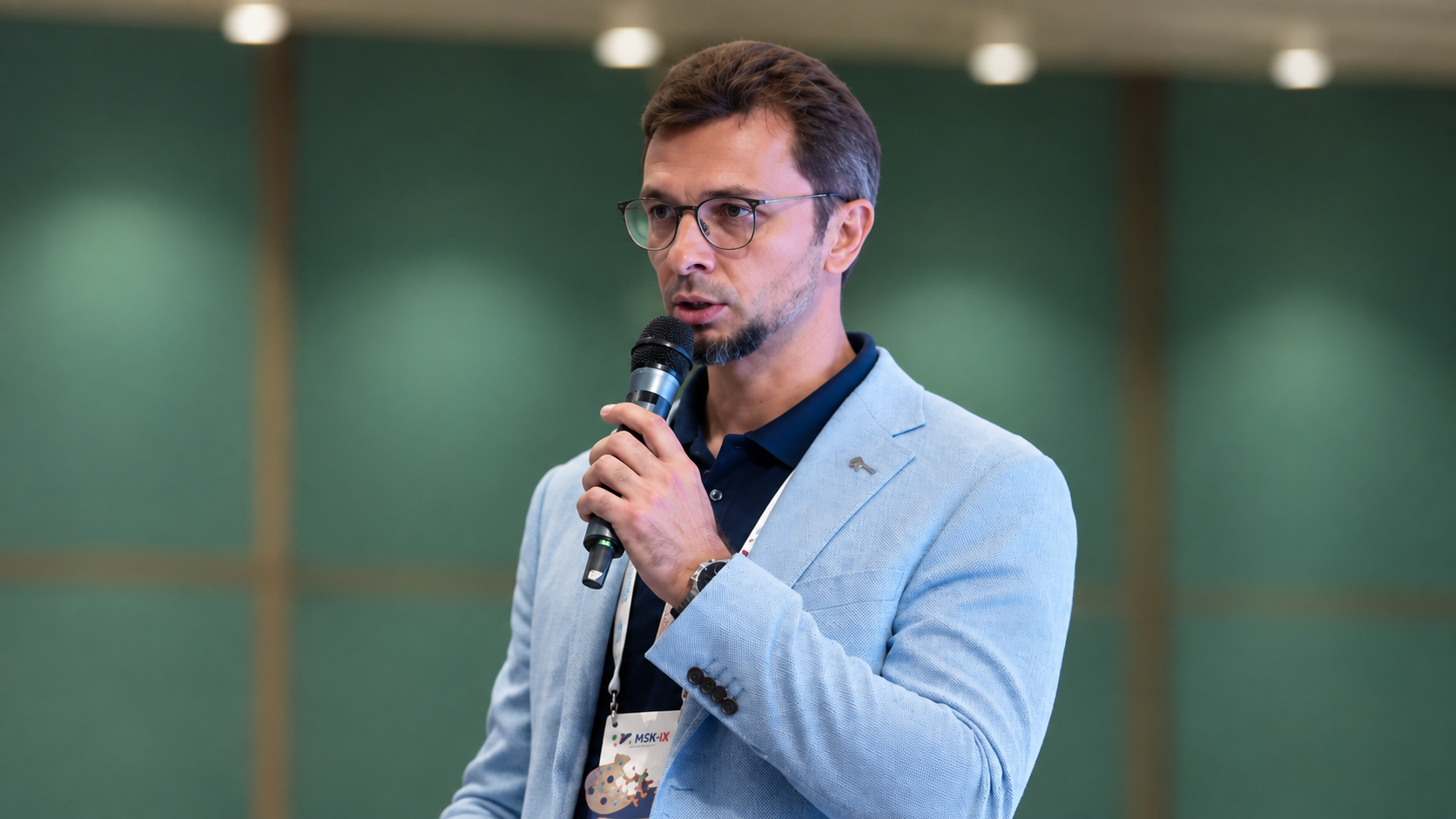
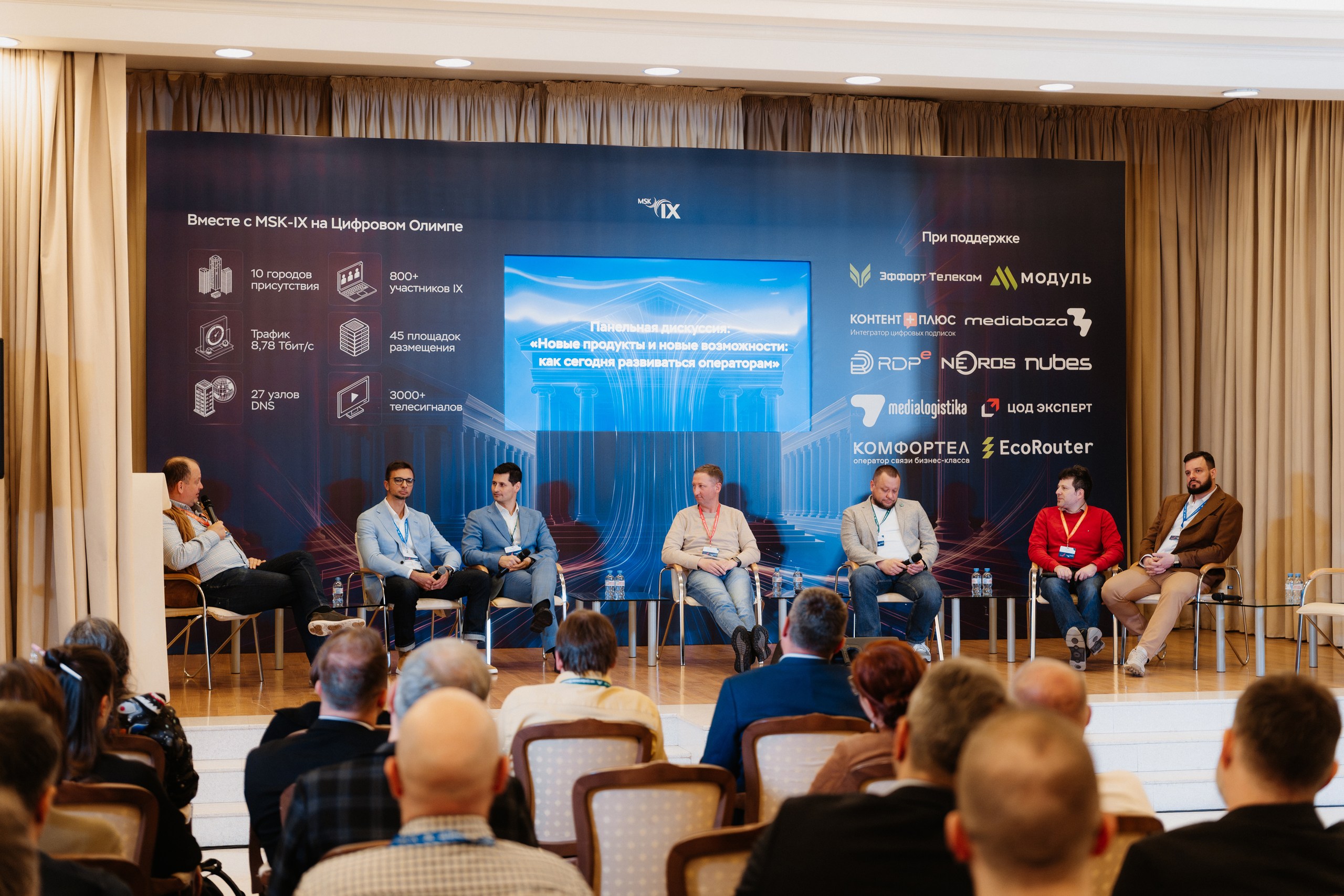
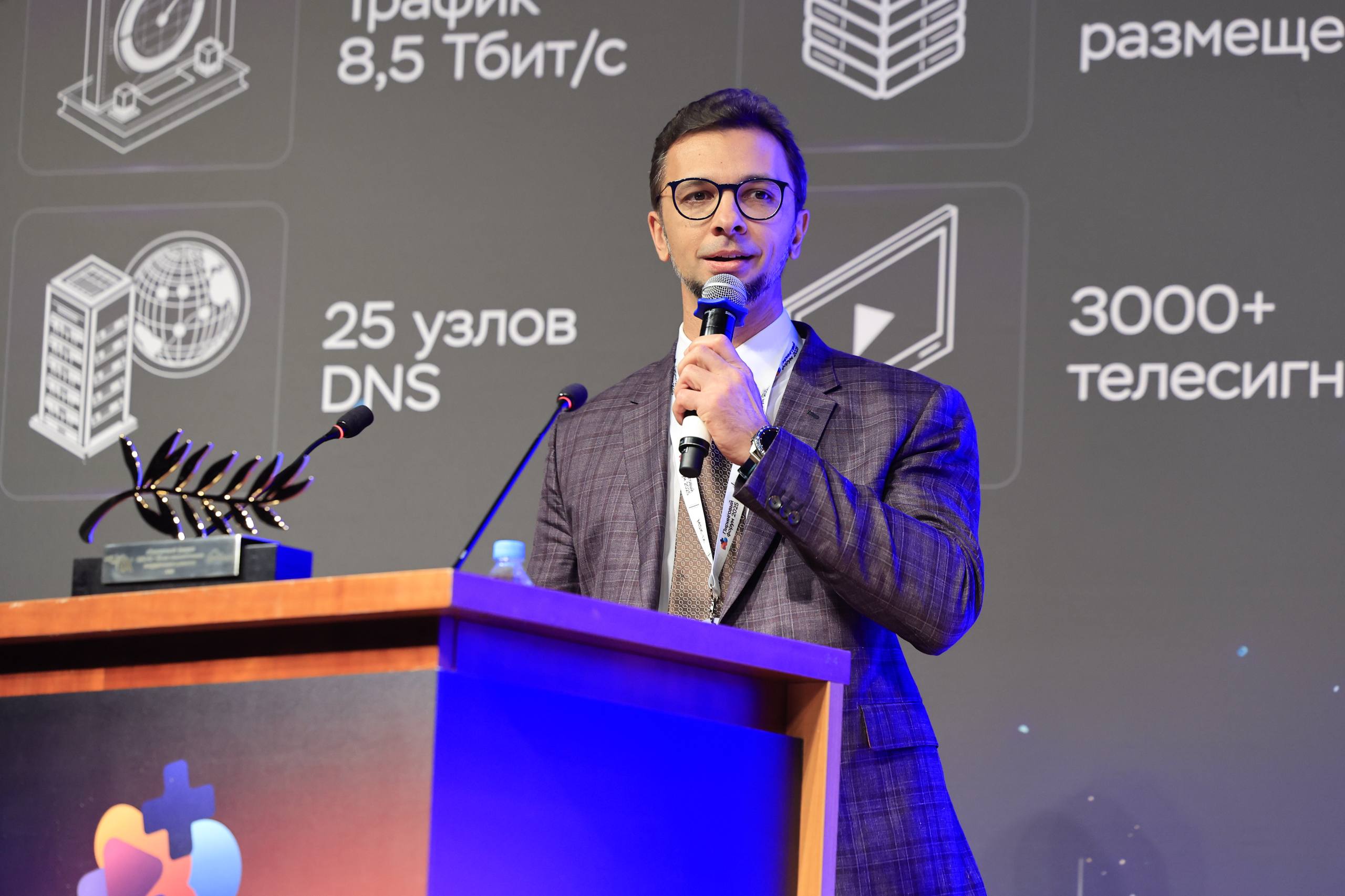
Grigory Kuzin, Director of Media Platforms at MSK-IX, took part in the plenary discussion of the 10th annual TeleMultiMedia Forum 2026: Leaders of the Digital Media Landscape, held on May 27 in Moscow.
In his speech, he noted that digital transformation of the media industry is no longer an end in itself. According to Kuzin, it is a natural stage in the market’s evolution, in which television, online video, advertising technologies, AI-enabled services, storage, delivery, copyright, and analytics must all operate within a single digital framework.
Strategic ‘assemblage point’ instead of crisis shock
Speaking about the media market’s resilience in the face of external challenges, Kuzin cited the example of the recent Express-AT1 satellite system shutdown, where signal outages led to various problems for operators and broadcasters in the Far East.
According to him, the outcome depended directly on whether a backup delivery system had been planned in advance. In this case, that “assemblage point” – a kind of central unifying element – was provided by terrestrial delivery via the Medialogistika platform, which served as a backup for satellite delivery.
In Kuzin’s estimation, approximately 60 percent of television channels that had a pre-established “satellite plus Medialogistika” system continued broadcasting almost as usual. Another 30 percent recovered within 24 hours: these were cases where the broadcaster’s signal was available via both satellite and Medialogistika, but the operator had not previously set up a terrestrial route as a permanent backup. About 10 percent of television channels relying solely on satellite delivery were out of service for significantly longer.
“For the operator, it’s a matter of service continuity for the subscriber. For the broadcaster, it’s a matter of maintaining distribution in the region. For the viewer, it’s even simpler: either the TV channel is there, or it isn’t. Therefore, the best crisis solution is a “strategic assemblage point” – not when we start solving a problem after it arises, but when we have a primary route, a backup route, and a clear switching scheme in place,” said Kuzin.
Television now part of digital
The Director of MSK-IX Media Platforms specifically focused on the changing logic of the television market. According to him, it is no longer entirely relevant to pit television and digital against each other.
“Traditional broadcasting has finally become part of the digital industry, transforming into a media service just like VOD. Interactive features, catch-up TV, and smart advertising on online platforms are clear evidence of this. Obviously, in this new environment, television cannot rely solely on legacy technical solutions. It requires the foundation of a developed digital industrial platform,” Kuzin emphasized.
He noted that in the past, the television market could be described by a relatively simple chain: “content – channel – broadcast.” Today, that is no longer sufficient. Content must be prepared, stored, adapted for different platforms, delivered to various environments, secured, quality-checked, integrated into an advertising or commercial model, and analyzed.
Fundamentally new areas have been integrated into the traditional production process. The first one relates to digital content monetization, which includes targeting, special markers, dynamic ad insertion technologies, and campaign effectiveness evaluation. The second area is AI solutions for media: from compliance and anti-piracy measures to automated reporting, speech recognition, real-time translation, and smart video tagging.
Mediabaza: an industrial platform for the media market
According to Kuzin, using all these technological elements as a set of disparate services is becoming increasingly difficult. If storage, delivery, playout, advertising technologies, AI services, document management, and monitoring exist separately, the industry faces manual integrations, separate agreements, different interfaces, additional information security risks, and complex operations.
The next stage of media digitalization is the assembly of these services into a single digital industrial system. This is precisely the role MSK-IX envisions for Mediabaza – an industrial platform for the media market that unites content, television channels, content storage, AI-based media technologies, advertising technologies, and both sellers and buyers of content and services.
The platform consists of several key layers. Mdisk is a professional, secure content storage and media workspace. The technology layer integrates AI-based media technologies, advertising technologies, and services that cover various stages of the production process: preparation, verification, publication, broadcast, monetization, and reporting. The Market module is a marketplace for content, television channels, and professional services for the media market.
“Mediabaza is the media market’s assemblage point – a central hub where content, technologies, infrastructure, service partners, and clients converge in a single digital circuit, and individual services begin to operate as part of a real media business chain,” Kuzin noted.
What does this look like in practice? Think of the creation of a turnkey FAST channel. The broadcaster registers with Mediabaza, populates the broadcast schedule with content, selects technical modules – from playout and interactive guides to monitoring and adtech solutions – and receives a broadcast-ready product.
Online cinemas find it in the catalog, adopt it immediately, and implement a commercial model. The project’s creator sees revenue growth, the video service delights viewers with a new product, and the media market transitions from amateurish manual integrations to an automated industrial system.
Infrastructure during retrenchment
Responding to a question about how to maintain investment in technological infrastructure during a period of retrenchment, Kuzin noted that for media companies, the approach of independently purchasing, installing, and maintaining a full range of new technological modules is becoming increasingly less rational.
According to him, for many market participants, it is more efficient to use infrastructure as a service within a unified digital system. This model eliminates the need to invest in a proprietary set of solutions under the CAPEX model: the necessary services can be accessed through a rental model.
For media companies, this reduces the cost of access to innovation. For tech companies and startups, especially in the AI field, Mediabaza could serve as a sandbox, a showcase, and a channel to market.
“Mediabaza is an example of efficiency during austerity. This is a project that doesn’t ask for government assistance, but rather helps the government develop the media industry, support domestic technologies, and bring Russian media products and services to the international stage,” Kuzin emphasized.
What will stop working in 2027
Speaking about near-term prospects for the media market, Kuzin noted that in 2027, narrow specialization in traditional television will become increasingly unproductive.
“Television isn’t dying; it has simply become part of the digital world. In this reality, B2B companies that can only handle one isolated task – for example, exclusively transporting media streams or handling just the local broadcasting stage – will eventually prove ineffective,” Kuzin believes.
According to him, the market no longer requires standalone services but a broader business and technological framework: content, storage, preparation, playout, adtech, monitoring, rights, analytics, and monetization.
“The future belongs to unified services and industrial platforms. This is precisely the role we envision for Mediabaza – an environment where television, online video, technology, infrastructure, and commercial models are brought together into a single working framework,” concluded the Director of MSK-IX Media Platforms.
About the event
The TeleMultiMedia Forum: Leaders of the Digital Media Landscape is an expert platform for discussing the development of the digital media industry, media consumption trends, audience acquisition and retention, and the integration of new technologies into the media business. The forum is organized by TMT Conferences, Telesputnik Publishing House, and the TelecomDaily Information and Analytical Agency.